Amplitude is a genuinely strong product-analytics platform. If you're looking past it, it's usually not because the analysis is lacking — it's because of how it's priced and billed, especially from India. Here's the honest version, and what a rupee-based alternative looks like.
Why teams look past Amplitude
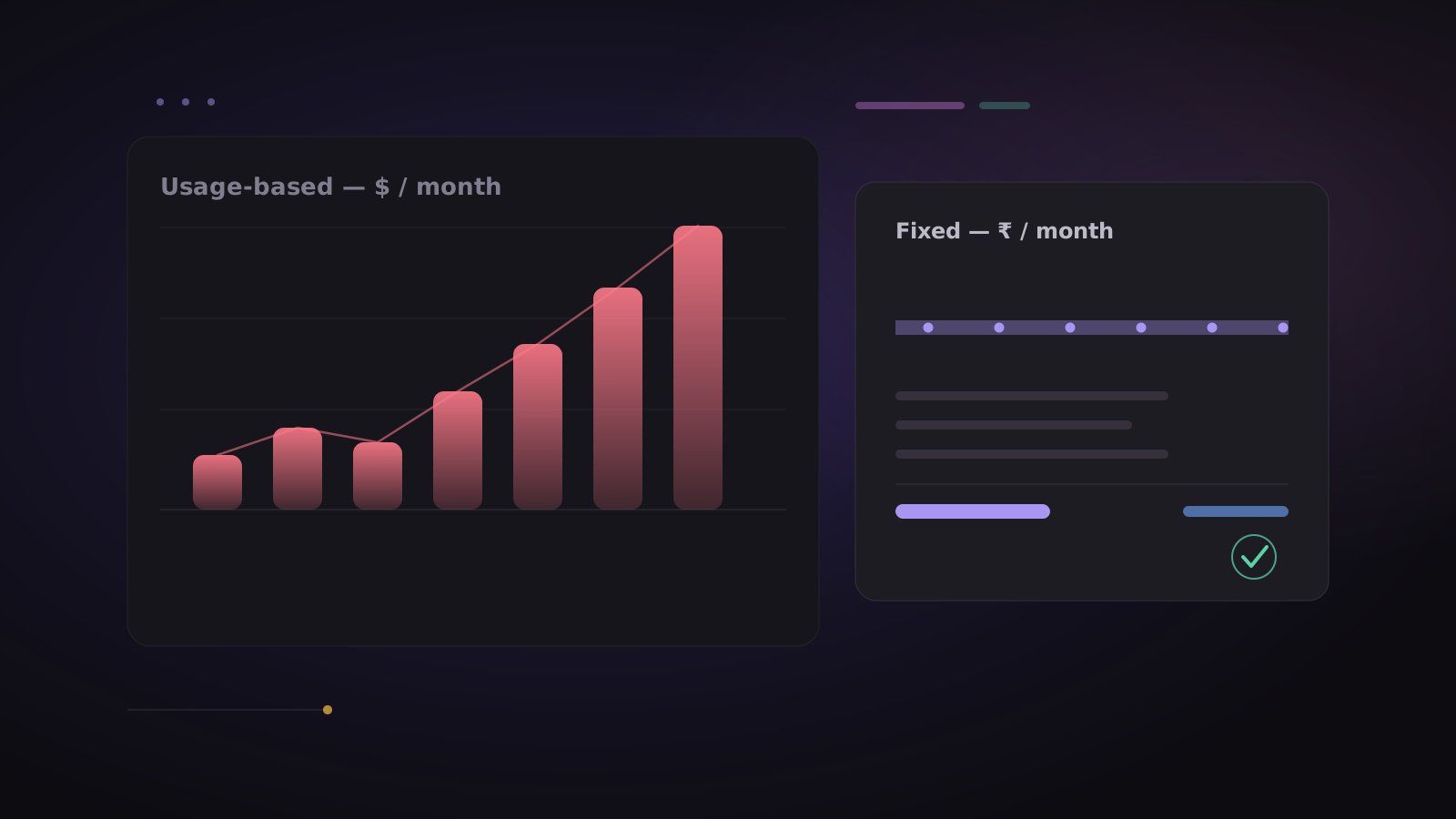
The bill is per event, and in dollars. Amplitude's self-serve Plus plan is priced by event volume through a calculator — when we checked on 22 September 2026 it quoted about $576 a month for 10 million events and $1,260 for 20 million (annual billing). For an Indian team that means USD invoices, forex markup on every renewal, and a number that moves with your traffic: the bill rises exactly when you're busiest.
The self-serve plan has limits. Plus allows one active experiment at a time and 20 behavioural cohorts per organization; past about 70 million events a month you move to a sales-negotiated contract.
It's deep — sometimes deeper than you need. Amplitude's full platform is powerful, but early and mid-stage teams often want the core reports done well, usable by PMs without a data team, rather than a platform they grow into over years.
None of this makes Amplitude bad — it makes it a mismatch for teams that want predictable, rupee-based product analytics they can run themselves.
What ClickLens gives you instead
ClickLens covers the reports most teams use Amplitude for, with a pricing model built for Indian teams:
- Insights — trend any event, unique users or totals, broken down by source, city, plan or any property.
- Funnels — where people drop off between steps, overall or by segment.
- Retention — whether people come back a day, a week or a month later.
- Flows — the paths people take before and after a key event.
- Users — a profile per person, with devices and logins linked, so numbers count people, not browsers.
- Boards — dashboards your team opens every morning, with view-only share links.
- Ask ClickLens — ask a question in plain English and get the chart.
And the pricing is the point: events included in every plan, at a fixed price in rupees, UPI/netbanking/card, a GST-ready invoice, no per-seat charge, and every feature on every plan.
How they compare
| What you care about | Amplitude Plus | ClickLens |
|---|---|---|
| How you're charged | Per event | Plan + extra events |
| Free events a month | 2 million | 2 million |
| Currency | USD + forex markup | INR, no markup |
| Next quarter's bill | Moves with your traffic | Mostly known in advance |
| Payment | International card | UPI, netbanking, card |
| A/B experiments | 1 active at a time | Included on every plan |
| Behavioural cohorts | 20 per organization | Included on every plan |
| Team members | Unlimited | Unlimited |
Amplitude figures are from its own pricing page, checked 22 September 2026; they change, so check amplitude.com/pricing for today's.
For the fuller landscape, see Mixpanel alternatives in India — Amplitude, PostHog and ClickLens all sit in the same product-analytics category, so the same comparison applies.
Switching
ClickLens uses a simple SDK and also accepts events in Mixpanel's format, so moving your tracking is a small change, not a rewrite:
import { clicklens } from "clicklens";

clicklens.init("YOUR_PROJECT_TOKEN");
clicklens.track("Signed up", { plan: "pro" });
Start free, with 2 million events a month and no card needed — enough to run a real product and compare for yourself. See pricing or how predictable, rupee-based pricing works.